Family Histories
Family Histories
Home NEW Updates About Us Feedback Historic Sites Consultants Contact Us Terms/Conditions
|
GNOWANGERUP GROCERY SHOPS 1950-60s Researched and compiled by Gordon Freegard April 2026 The town of Gnowangerup was thriving in the 1950-60s supporting three grocery stores all on the main street of Yougenup Road. G. S. Hendry had a small grocery section on the right hand side of their premises, with a staff of two, managed by Mrs. Day Walker, with Johnny Bennett as assistant. |
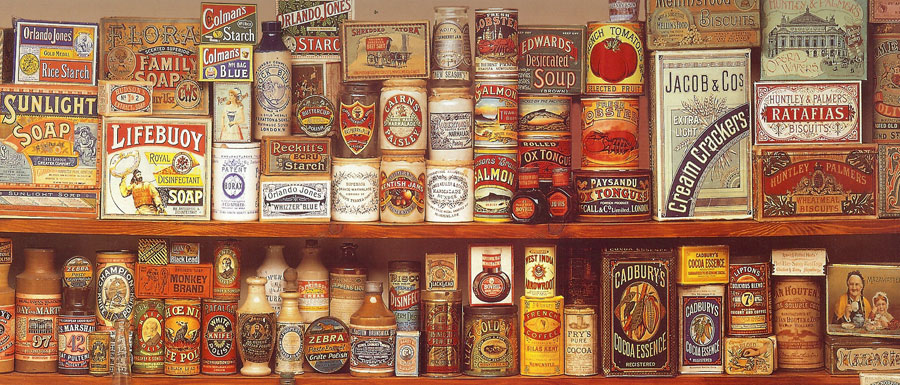
SHELVES OF OLD GROCERY LINES #1 |
|
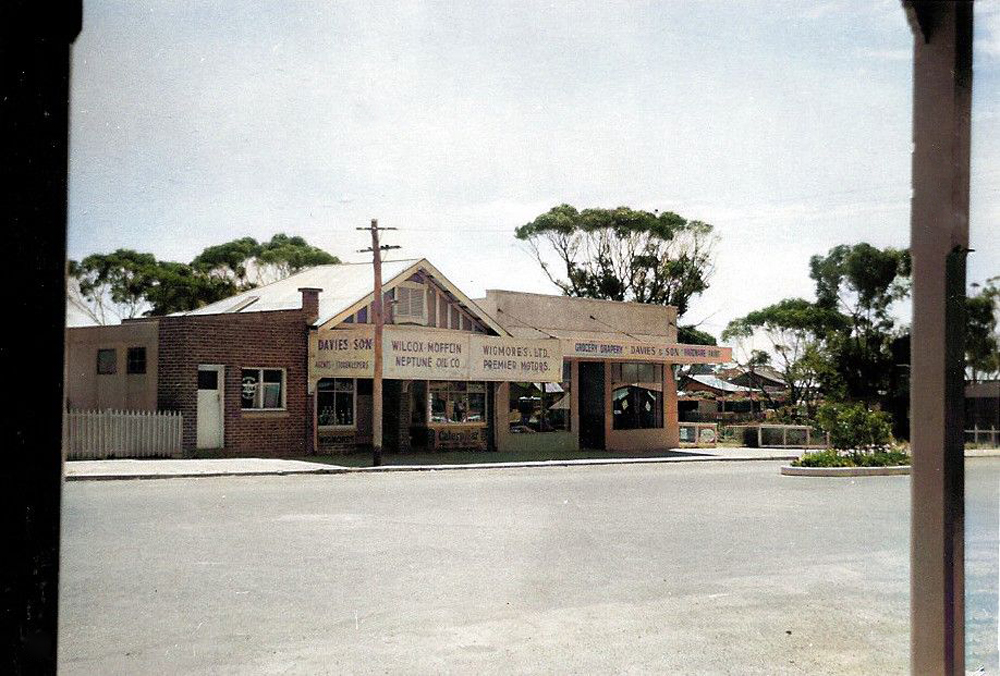
H. DAVIES & SON STORE, GNOWANGERUP. GROCERY SECTION ON LEFT SIDE NEXT TO THE "STAR NEWSPAPER" BUSINESS #2 |
Brian? Altham Janina Benarski Roslyn Eastwood Faye Frantom Gordon Freegard |
|
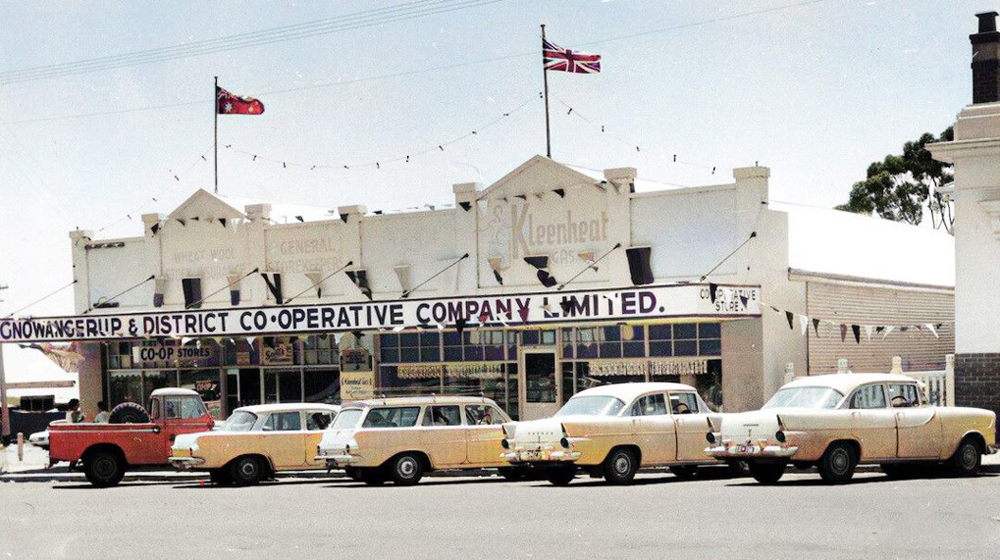
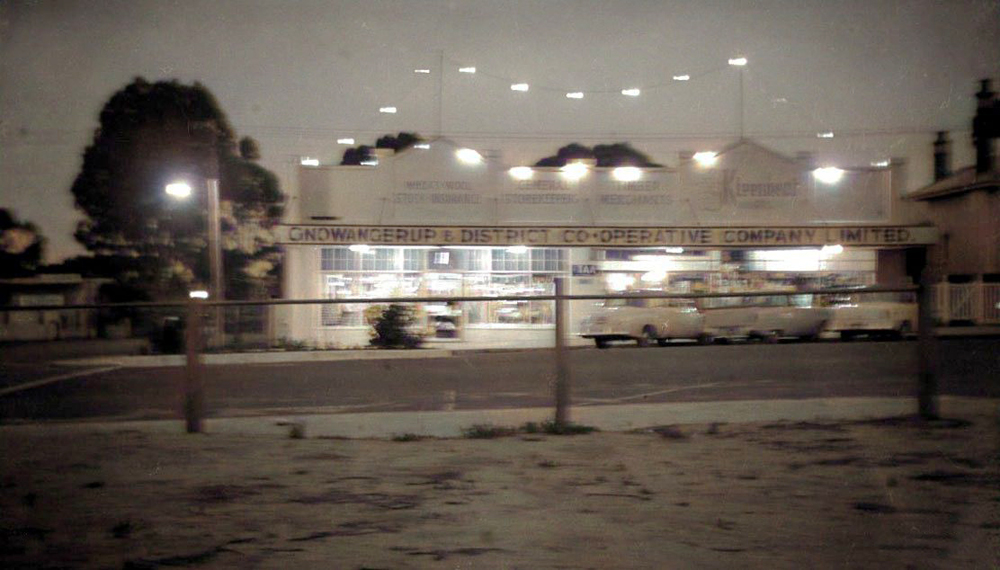
GNOWANGERUP & DISTRICT CO-OPERATIVE STORE. GROCERY SECTION ON LEFT SIDE #3 |
|
|
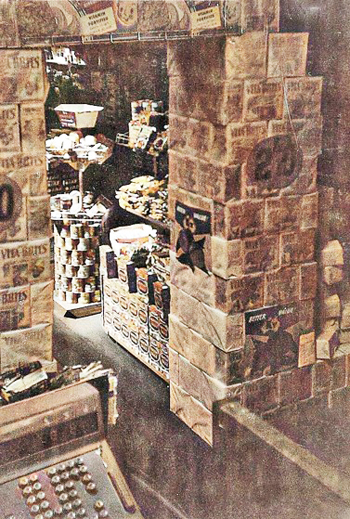
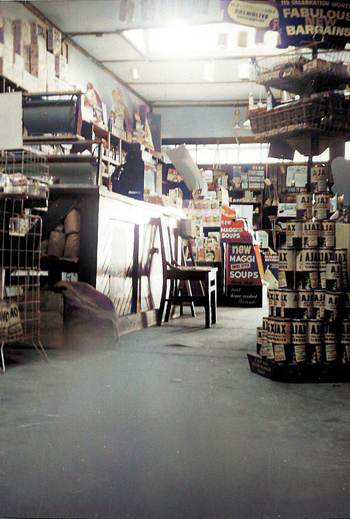
GNOWANGERUP CO-OP INSTORE PROMOTION #4 |
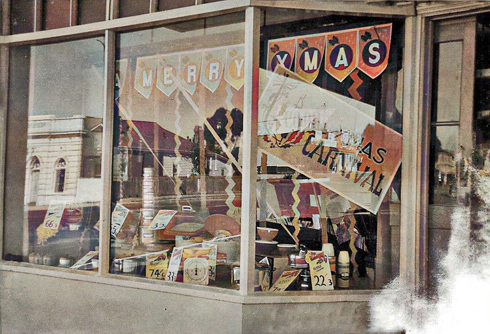
Further up the street on the corner of the main intersection was the Gnowagerup & Distrcts Co-op. It had a manager and five other staff in the grocery section. Over these years it included: Patricia Godfrey Arthur Gunther Johnny Marshall Margaret McKenna John White (Manager Later) GNOWANGERUP CO-OP CHRISTMAS WINDOW DISPLAY #5 |
|
|
|
Thursday was the main shopping day and the local farmers would then buy their weekly groceries on that day. Everyone seemed to have “their” particular parking spot. My grandmother, Mabel Freegard, always parked her car outside the Star Newspaper office. The car was never moved for the rest of the day as they walked the street doing their other business. The only time grandmother moved her car was to go and have morning or afternoon tea with friend Mrs Killick. Grocery staff wrote down the ordered groceries on to a docket book by pencil. These books were partly sponsored by Bushells Tea or some other company. They had sheets of carbon paper so they produced a copy for the office which would send out monthly statements for payment. Most people had accounts with the various firms. In those days credit was respected and honoured and very few people paid cash. Customers were very loyal and only shopped at their preferred shop for years and years creating a great rapport between the customer and the shop owner. |
|
Once the orders were taken the customer would leave the store to do other business while the staff compiled the order to be collected later. Groceries were all priced using a Journal published by a Grocery & Storekeepers Association which came out monthly. It listed hundreds of lines and showed a basic retail price for each item plus a number of columns showing a freight increase in the price depending whether you were 50, 100, 150, 200 or more miles from Perth. It also highlighted any lines where the wholesale cost price had increased for that month. All three grocery stores operated on these prices. There was no price cutting and they all co-operated together very well. Each maintaining their own loyal customer base by providing good friendly personal service. If one store could not supply a particular line that a customer had ordered, they could run across to one of the other stores and purchase it with a 20% discount. Meaning their customers order could be completed. |
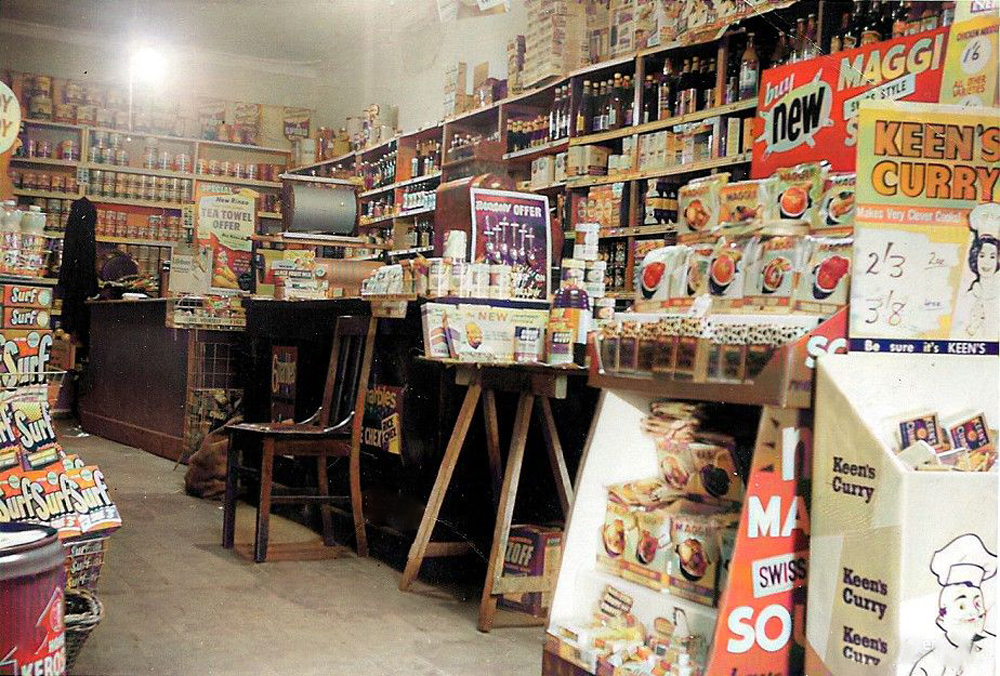
INTERIOR OF GROCERY SECTION OF H. DAVIES & SON'S STORE, GNOWANGERUP #7 |
|
|
|
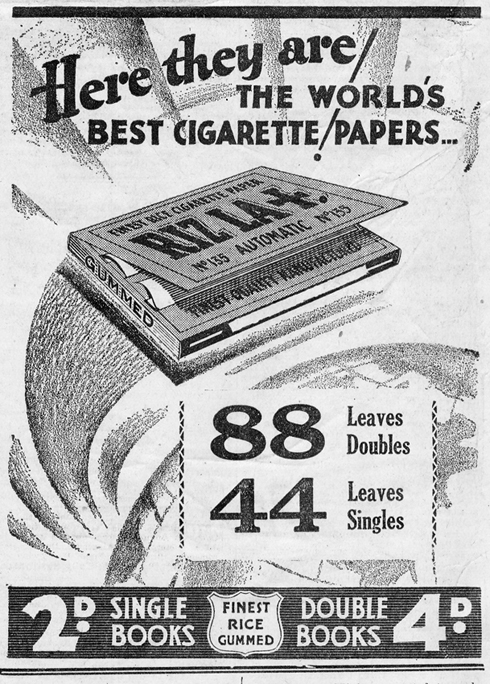
ADVERT FOR RITZ LA CIGARETTE PAPERS #9 |
Orders were packed in cardboard boxes, with perishable items wrapped separately and stored in the refrigerator. When the customer called the shop assistant carried the boxes of groceries out to their waiting car. Not like today, where because of insurance risk the assistant cannot leave the store. Oh! how things have changed. Things like; A left-handed screwdriver A tin of striped paint A packet of sparks A tin of pin pricks and so on. |
|
Many bulk lines were packed into more convenient pack sizes, by the staff in between serving customers. Kerosene, Turpentine, Methylated Spirits, Vinegar & Phenyle were bottled into “clear skin bottles”. That is re-cycled bottles that had no branding on them. Produce such as sugar was repacked from 70 pound hessian bags into 2, 4 & 6 pound paper bags. Plain & Self Raising Flour was repacked from 150 pound jute bags into 2 & 4 pound paper bags. Currants, Sultanas, Dates, Split Peas, Pearl Barley, Rice, Sago, Tapioca & Mixed Dried Fruit all packed into one pound bags. Dates came pressed together in slabs in wooden boxes. Staff weighing Dates into one pound packs would always grab a few to eat while doing this until they were told the Arabs used their bare feet to press them into the slabs. Jute wheat bags full of Potatoes were repacked into 14, 7 & 3 1/2 pound paper bags. Jute wheat bags full of Bran, Pollard & Shellgrit was repacked into smaller packs. |
|
MILLS & WARES BISCUIT TIN #10 |
Mills & Wares biscuits had a range of biscuits that came in bulk tins and could be ordered by the pound by the customer. This range included Ginger Nuts, Nutties, Strathmore, Fruit Mince Rolls, Cocoanut Rings, Currant Shorties, Tea, Picnic Assorted and the favorite of all time Chocolate Coated Broken Pieces. The cream of the lot was finding the Granita pieces that were chocolate coated. Bacon came in sides from Watsonia, which had to have the rib bones removed before being sliced to a preferred thickness by the customers. These bones were eagerly sort after for use in making soup. Ham, Polony and Silverside Meat came in bulk and had to be sliced as required. Cheese came in big round cloth covered shapes about 12 inches diameter and 15 inches high. It could be cut into smaller sizes for the customer using a “wire cheese cutter”. This was a length of wire about 24 inches long with a wooden handle at right angles at each end so it could be pulled through thus cutting the cheese. |
|
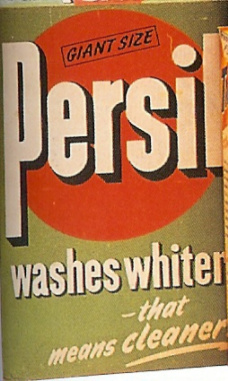
About this time new lines were entering the market. Things like tins of Nescafe Instant Coffee granules as opposed to Bushells bottles of liquid Coffee & Chicory. Another was Maggi Instant Soup packets to which you just added hot water, as opposed to tins of soup. Washing powders such as Persil, Surf, Rinso, Zoak, Omo and Lux Flakes were taking over from the bars of soap, like Peak and Velvet, that had previously been popular on washing days. Blocks of Sand Soap were also inuse. Also Zoff dish-washing detergent had just come on to the market. Pressure packs of Mortien Fly Spray was replacing the old metal hand pump. Silver Star Starch was being replaced by pressure packs of spray starch. Zebra Stove Polish for the old cast iron Metters wood stoves was popular. Certain brands of toilet soap were being deleted like Cashmere Bouquet, Lifebouy, Solyptel, Cuticura and Protex. Health products like Hypol Cod Liver Oil, Molasses, Ford Pills, Dr. Beechams Pills, DeWitts Antacid Powder and Bex Powders and Tablets. Junket and Blancmange tablets along with Fulcreem Custard Powder and Aeroplane jellies were popular for desserts. Cigarettes were very popular with brands like Craven "A", Turf, Capstan. Tobacco ready rubbed and plain like Champion, Havelock, Log Cabin and Capstan also "plugs" of tobacco were sort after along with Rizla and Tally-Ho cigarette papers for those who wish to roll their own cigarettes. |
EARLY WASHING POWDER PRODUCT #11 |
|
The harmony between all three stores changed in the early 1960’s. The grocery section manager at the Co-op Store, Allan Baker, convinced the directors of the Company to change to a “self-service store”. This was a new trend that was happening across the State in the grocery trade. It meant prices could also be reduced because of it. Actually they really didn’t go completely over to entirely self-service as they still served customers and compiled others for them. |
|
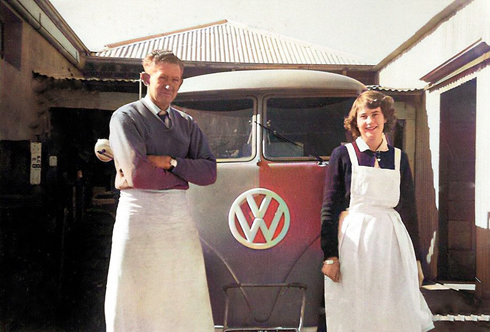
SYD WALKER & ROSLYN EASTWOOD #12 |
Both the Davies Store and the Co-op Store continued a service on one day of the week calling on houses in the townsite to write up orders and then deliver them to the customer’s home on the same day. Most orders from Davies store were delivered by Syd Walker in a Volkswagen Kombi van. Other smaller orders were delivered by a junior staff member riding a special push bike that had a small front wheel with a large cane baskets above it. At the Co-op two junior members would head off on push bikes first thing in the morning calling on houses to write up the orders, then in the afternoon the Co-op deliveries were usually done by Grocery Manger John White driving their Ford Zephyr Ute.
|
|
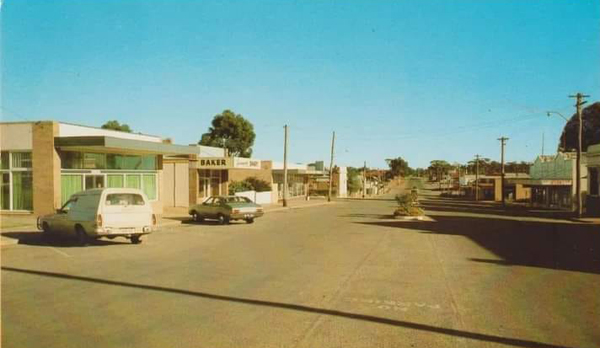
YOUGENUP ROAD, GNOWANGERUP SHOWING BOTH THE OLD AND NEW CO-OP STORES OPPOSITE EACH OTHER. #13 |
As the price cutting became more competitive the only way to survive was to join a group that did bulk purchasing thus getting the cost price down which could be passed on to the final customer. Groups like Save-way, Four-Square, Foodland, Supa-Valu, Foodmasters sprang up. The Co-op joined other Co-ops in the state and formed Co-op Wholesale Services known as CWS, based in Welshpool. Each shop would order enough lines to completely fill a railway carriage. This was a big saving on the freight costs.
|
|
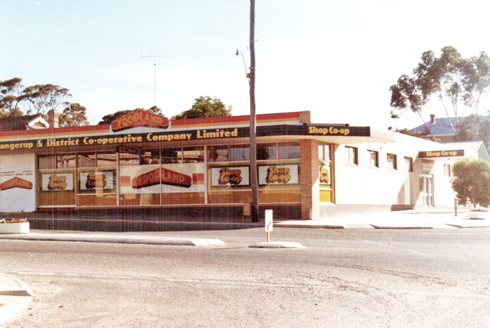
As time went by we saw the demise of all but the Co-op Store
|
GNOWANGERUP & DISTRICTS CO-OPERATIVE STORE TRADING UNDER THE "FOODLAND" BANNER #14 |
|
|
|
Every endeavour has been made to accurately record the details however if you would like to provide additional images and/or newer information we are pleased to update the details on this site. Please use CONTACT at the top of this page to email us. We appreciate your involvement in recording the history of our area.
|
|
References: Article: Gordon Freegsrd Image: 1, 9, 10, 11, 13, 14 Internet
Copyright : Gordon Freegard 2026 |